Choosing reliable Aluminum Parts suppliers is rarely as simple as comparing prices on a spreadsheet. Global buyers must examine alloy grades, machining tolerances, surface treatments, production capacity, and export experience. A supplier may offer polished prototypes, yet struggle with repeat orders or strict inspection requirements. Small details matter. Thread depth. Burr control. Packaging strength.
Materials expert Professor Michael F. Ashby has noted, “The best material for a design is not necessarily the one with the best properties.” This principle also applies to supplier selection. The strongest aluminum alloy may not suit every application. A practical choice depends on weight, corrosion exposure, forming methods, tooling costs, and the buyer’s delivery schedule. In real projects, a slightly higher unit price can prevent expensive failures later.
This guide reviews 10 Best Aluminum Parts Suppliers for Global Buyers through a practical purchasing lens. It considers manufacturing capabilities, quality systems, communication, customization, certifications, lead times, and after-sales support. Evidence matters more than attractive catalog images. Buyers should request material certificates, inspection reports, sample parts, and clear quotations before committing.
No ranking is perfect.
Supplier performance can vary by region, order size, and part complexity. A factory that excels at CNC brackets may not handle thin-wall extrusion or high-volume die casting equally well. The following comparison aims to make that uncertainty visible. It helps engineers, importers, and product teams ask better questions before production begins.
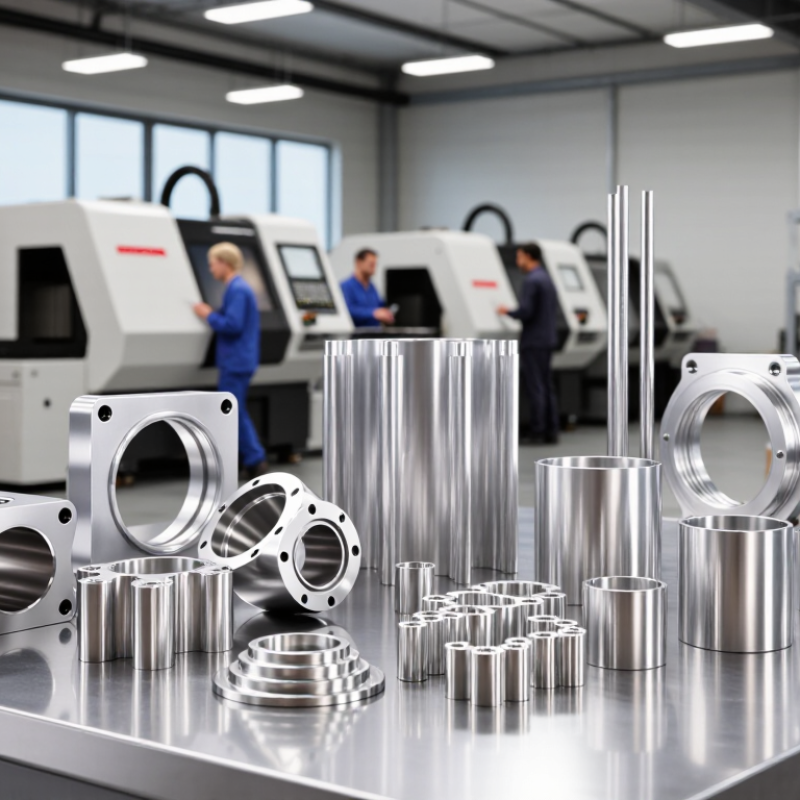
A reliable aluminum parts supplier proves capability through repeatable results, not polished promises. Global buyers should request sample parts, inspection reports, and clear tolerance notes before approving production. A supplier experienced with 6061 and 7075 aluminum can explain how machining, heat treatment, and surface finishing affect performance.
Look for documented quality systems, calibrated measuring equipment, and full material traceability. A coordinate measuring machine report can confirm critical dimensions, while batch certificates verify the alloy and temper. Reliable suppliers also discuss anodizing thickness, color variation, corrosion resistance, and packaging details. Small details matter. Parts should arrive separated, protected, and labeled for quick receiving inspection.
Communication reveals operational maturity. A dependable supplier answers technical questions directly, identifies risks early, and provides realistic lead times. It should explain what happens when a drawing is unclear or a tolerance is difficult to hold. Cheap quotations can hide weak inspection practices or unstable scheduling. That lesson is easy to overlook.
No supplier is perfect. Even strong factories may experience tool wear, material delays, or cosmetic variation. The important question is whether they report problems honestly and correct them with evidence. Ask for corrective-action records, production photos, and references from comparable industries. A thoughtful supplier welcomes these checks instead of treating them as distrust. For global buyers, dependable documentation and transparent communication often matter as much as the final aluminum part.
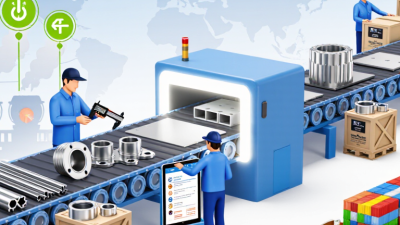
A neutral 100-point procurement framework for evaluating aluminum parts suppliers without ranking or identifying specific companies.
Quality consistency and material traceability receive the highest weighting because global buyers typically need repeatable dimensions, verified alloy specifications, inspection records, and dependable production control. Delivery, engineering support, scalability, and export packaging complete the evaluation.
When comparing aluminum parts suppliers, assess manufacturing evidence before polished sales claims. Request alloy and temper records, process-flow diagrams, inspection plans, and recent sample reports. A capable factory should explain how it controls porosity, distortion, surface defects, and dimensional drift. Ask for CMM results tied to your drawing, not a generic “passed” certificate. For global orders, verify tooling ownership, backup equipment, packaging trials, and realistic lead-time data. Ask for evidence.
Quality systems matter, but certificates alone are not enough. Check certification scope, calibration intervals, nonconformance records, and corrective-action closure. During an audit, inspect the measurement room and production floor. Look for labeled batches, dry storage, and traceable heat numbers. ISO 9001 alignment is useful; process capability data is stronger. I would also compare first-article results with three repeated batches. One perfect sample proves little.
Sustainability and commercial resilience deserve equal scrutiny. The International Aluminium Institute reports that recycled aluminum requires roughly 5% of primary metal’s energy. Ask suppliers to separate recycled-content claims from verified mass-balance data. Its Aluminium Sector Greenhouse Gas Pathways to 1.5°C report projects demand rising from about 95 million tonnes in 2020 to 170 million tonnes by 2050. That pressure can affect capacity and premiums. Review energy sources, scrap recovery, export documentation, payment terms, and contingency plans. The cheapest quotation may hide unstable yields or expensive rework. Numbers can mislead. Pair them with factory evidence.
10 Leading Aluminum Parts Suppliers and Their Specialties
Global buyers need more than a low quotation. The right supplier should match the part, finish, volume, and delivery route. CNC machining specialists suit tight tolerances, threaded holes, and small batches. Extrusion suppliers handle long profiles for frames, rails, and heat sinks. Die-casting manufacturers produce complex housings at higher volumes. Sheet-metal fabricators work well for brackets, covers, and formed panels.
Other leading suppliers focus on forging, precision turning, surface treatment, welding, rapid prototyping, or custom assembly. Forging improves strength for demanding mechanical parts. Turning suppliers create accurate shafts, spacers, and bushings. Anodizing teams provide controlled color and corrosion resistance. Prototype houses help test a design before expensive tooling begins. In my experience, supplier labels can be misleading. A factory may claim broad capability but outsource critical processes. Request process records, inspection samples, material certificates, and recent production photos.
Tips: Send a clear 2D drawing, 3D file, alloy grade, tolerance range, finish requirement, annual volume, and packaging details. Ask how operators measure flatness and hole position. Confirm whether inspection occurs before packing. Small details matter. I once underestimated packaging space, and freight costs rose sharply. Buyers should also compare communication speed, corrective-action habits, sample quality, and realistic lead times. A polished quotation is useful, but repeatable production is more valuable.
When comparing the 10 best aluminum parts suppliers for global buyers, quality should begin with evidence. Ask for alloy certificates, inspection reports, and production samples. A reliable supplier can explain whether it uses CNC machining, extrusion, die casting, or forging. It should also state achievable tolerances clearly. Vague promises are warning signs.
Capabilities matter when parts change from simple brackets to tight-fit housings. Check machine sizes, surface treatments, secondary assembly, and inspection equipment. During a sample review, examine burrs, flatness, thread quality, and anodizing color. Small defects often reveal weak process control. My own evaluation would not rely on photographs alone. Physical samples are more honest.
Pricing requires careful comparison. A low unit price may exclude tooling, packaging, inspection, or ocean freight. Request a complete quotation with minimum order quantities and payment terms. Delivery options should include production lead time, shipping method, export documents, and protective packaging. Suppliers with local warehouses may shorten replenishment time, but storage fees can reduce that advantage. One imperfect assumption is treating promised delivery dates as fixed. Material shortages, port congestion, and design revisions can still cause delays. A written schedule with milestone updates is safer. Language clarity also matters. Misunderstood drawings create expensive rework.
An anonymized benchmark of supplier profiles for CNC machining, die casting, extrusion, and aluminum fabrication projects.
| Supplier Profile | Primary Processes | Common Aluminum Grades | Typical Tolerance | Surface Finishing | Prototype MOQ | Production MOQ | Indicative Price Range | Sample Lead Time | Production Lead Time | Quality Documentation | Delivery Options | Best Fit |
|---|---|---|---|---|---|---|---|---|---|---|---|---|
| Supplier Profile 01 | CNC machiningTurningMilling | 6061-T6, 7075-T6, 2024-T3, 5052-H32 | ±0.05 mm standard; ±0.02 mm on selected features | Anodizing, bead blasting, powder coating, chemical conversion coating | 1 piece | 50–500 pieces | US$8–45 per part for medium-complexity parts | 5–10 business days | 15–30 business days | Material certificates, dimensional inspection report, COC available | Express courier, air freight, sea freight, DDP by quotation | Precision housings, brackets, prototypes, low-volume assemblies |
| Supplier Profile 02 | High-pressure die castingCNC finishing | A380, ADC12, A360, EN AC-46000 | Cast surfaces typically ±0.20–0.50 mm; machined features ±0.05 mm | Deburring, shot blasting, powder coating, anodizing on suitable alloys | 1 tooling review sample | 1,000–10,000 pieces | US$1.50–12 per part, excluding tooling | 4–8 weeks including tooling samples | 6–12 weeks after tooling approval | Alloy certificate, X-ray or porosity inspection by agreement, PPAP support | Sea freight for volume; air freight for urgent replenishment | Automotive, electronics, motor housings, high-volume enclosures |
| Supplier Profile 03 | Aluminum extrusionCuttingCNC drilling | 6063-T5, 6061-T6, 6005A-T6 | Extrusion profile tolerance generally ±0.10–0.30 mm | Mill finish, anodizing, powder coating, PVDF coating | 10–30 kg or one bundle | 300–1,000 kg per profile | US$3–10 per kg for standard profiles; tooling extra for custom profiles | 3–6 weeks for custom die and samples | 4–8 weeks after profile approval | Mill test certificate, coating thickness report, dimensional report | Sea freight, rail freight, consolidated LCL shipments | Frames, rails, heat sinks, architectural and industrial profiles |
| Supplier Profile 04 | Sheet-metal fabricationLaser cuttingCNC bending | 5052-H32, 6061-T6, 5754-H22, 3003-H14 | Laser-cut features ±0.10 mm; formed parts depend on geometry | Brushing, anodizing, powder coating, wet painting, electropolishing | 1 piece | 20–1,000 pieces | US$12–90 per fabricated part, depending on thickness and operations | 5–12 business days | 15–35 business days | Material traceability, first-article inspection, weld inspection if required | Courier, air freight, sea freight, customer-designated forwarder | Control cabinets, covers, panels, brackets, laboratory equipment |
| Supplier Profile 05 | Gravity castingSand castingHeat treatment | A356-T6, A357-T6, AlSi7Mg, AlSi10Mg | As-cast ±0.50–1.50 mm; machined areas typically ±0.05 mm | Machining, shot blasting, impregnation, powder coating | 1–5 pieces | 50–2,000 pieces | US$18–160 per part, depending on weight and tooling | 3–6 weeks | 5–10 weeks | Heat-treatment records, material certificates, radiography or penetrant testing by agreement | Air freight for samples; sea freight for production | Large structural parts, pump bodies, automotive and aerospace prototypes |
| Supplier Profile 06 | CNC machining5-axis machiningSmall-batch production | 7075-T6, 6061-T651, 6082-T6, 2024-T351 | ±0.025 mm standard on critical machined features | Hard anodizing, Type II anodizing, passivation of inserts, laser marking | 1 piece | 10–250 pieces | US$35–220 per part for complex precision components | 7–15 business days | 20–45 business days | Full dimensional report, FAI, material and heat-treatment certificates | Priority air freight, express courier, insured shipment | Aerospace tooling, robotics, medical equipment, precision mechanisms |
| Supplier Profile 07 | ForgingCNC machiningHeat treatment | 6061-T6, 6082-T6, 7075-T6, 2014-T6 | Forged dimensions depend on part size; machined areas ±0.05 mm typical | Shot blasting, anodizing, chromate conversion, powder coating | 5–20 pieces | 200–5,000 pieces | US$15–120 per part, excluding forging die costs | 5–9 weeks including die trials | 7–14 weeks after approval | Mechanical test reports, grain-flow documentation, heat-treatment records | Air freight for samples; sea or rail freight for production | High-strength levers, aircraft fittings, automotive suspension components |
| Supplier Profile 08 | Aluminum tube fabricationTube bendingWelding | 6061-T6, 6063-T5, 5052-H32 | Tube-cut length ±0.50 mm; bend accuracy commonly ±0.5° | Brushing, anodizing, powder coating, clear or color finishes | 5 pieces | 100–2,000 pieces | US$10–75 per assembly, depending on bends and welding | 10–18 business days | 25–50 business days | Weld visual inspection, dimensional report, material certificates | Courier, air freight, sea freight, palletized delivery | Chassis, furniture frames, fluid lines, lighting and display structures |
| Supplier Profile 09 | Low-pressure castingCNC machiningLeak testing | A356-T6, A357-T6, AlSi7Mg0.3 | Cast dimensions typically ±0.30–0.80 mm; machined features ±0.05 mm | Shot blasting, machining, powder coating, impregnation | 1–3 pieces | 100–3,000 pieces | US$20–140 per part, depending on geometry and testing | 4–8 weeks | 7–14 weeks | Leak-test records, CT or X-ray inspection by agreement, material certificates | Air freight for validation parts; sea freight for scheduled production | Wheels, pump components, motor housings, pressure-containing parts |
| Supplier Profile 10 | Integrated sourcingMulti-process manufacturingAssembly | 6061, 6063, 5052, 7075, A356 and other specification-approved alloys | Project-specific; typically ±0.05 mm for CNC features | Anodizing, powder coating, plating, painting, laser marking | 1 piece | 50–10,000 pieces | US$5–180 per part depending on process, volume and assembly content | 7–20 business days | 20–60 business days | Inspection plans, COC, material certificates, PPAP and supplier audit support | DDU, DDP, FOB, FCA, air freight, sea freight, regional warehousing | Global programs requiring several processes, kitting and final assembly |
Selecting an aluminum parts supplier requires more than comparing unit prices. Start with material control. Ask for alloy certificates, heat numbers, recycled-content records, and dimensional inspection reports. The International Aluminium Institute reported global primary aluminum production above 70 million tonnes in 2023. That scale makes traceability essential, especially when supply chains cross several countries.
Review the supplier’s actual process capability. A capable partner should explain its casting, forging, CNC machining, finishing, and inspection limits in clear terms. Request sample parts, tolerance data, surface-finish readings, and a corrective-action history. ISO 9001 certification can support quality discipline, but it cannot replace a factory audit. Walk through the inspection area. Check calibration labels. Ask who approves a shipment.
Delivery performance also deserves evidence. Compare quoted lead times with production capacity, tooling schedules, packaging methods, and customs experience.
The International Aluminium Institute notes that recycling aluminum requires roughly 5% of the energy used for primary production. Therefore, suppliers with verified recycled-material systems may support both cost and environmental targets.
Be careful, though. “Green” claims can remain vague without mass-balance records or testable documentation.
A low quote can be expensive.
During supplier selection, score quality, communication, capacity, compliance, and total landed cost separately. I once treated fast replies as proof of reliability; that was a weak assumption. A detailed pre-production review often reveals more than polished sales language. Require measurable acceptance criteria before placing the first order.